
When you discover termites in your Kansas City home, choosing the right treatment can feel overwhelming. Two main options dominate the market: Advanced Termite Baiting Systems (ATBS) by BASF and liquid termite treatments. Each method has distinct advantages, and understanding how they work will help you make the best decision for protecting your property.
Don't let termites compromise your home's structural integrity. Contact Augustine Exterminators, Inc. today at (913) 398-3575 or fill out our online contact form for a professional termite inspection and treatment plan.
Understanding How Termites Threaten Your Home
Termites cause billions of dollars in property damage across the United States each year. These wood-destroying insects work silently behind walls, under floors, and within wooden structures. In the Kansas City area, subterranean termites are the most common culprit, entering homes through the soil and building mud tubes to access wood. Early detection and treatment are essential to minimize damage, but choosing between ATBS and liquid treatments requires understanding how each method works.
What Are Advanced Termite Baiting Systems (ATBS)?
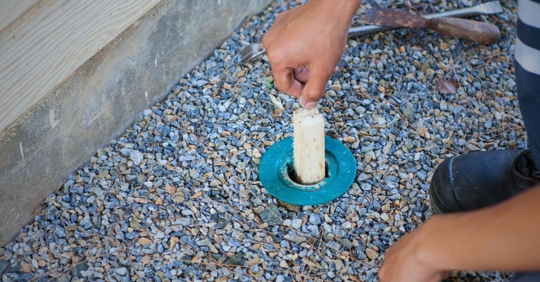
Advanced Termite Baiting Systems (ATBS) use strategically placed monitoring stations around your property's perimeter. These stations contain wood or cellulose material that attracts termites. When termites discover these stations and begin feeding, the bait is replaced with a slow-acting termiticide. Termites carry this treated material back to their colony, sharing it with other termites, including the queen. Over time, this method can eliminate the entire colony. At Augustine Exterminators, Inc., we prefer to you advanced termite baiting systems by BASF as these are specially designed to create a termite-friendly environment, making them seek out the system faster than other systems.
How ATBS Works Step-by-Step
The installation process begins with placing monitoring stations in the ground approximately every 10 to 20 feet around your home's foundation. Technicians regularly inspect these stations to check for termite activity. When termites are detected, the monitoring material is swapped with active bait containing termiticide. The termites consume the bait and take it back to their colony, spreading the treatment throughout the termite population. This process continues until the colony is eliminated, which typically takes several months.
Advantages of ATBS
- Targeted approach: The system focuses on eliminating the colony at its source rather than creating a general barrier
- Environmentally conscious: Less chemical product is used compared to traditional treatments, and it's applied only where termites are active
- Ongoing monitoring: Regular inspections help detect new termite activity early, providing continuous protection
- Minimal disruption: Installation requires small holes for stations rather than extensive trenching around your foundation
These benefits make ATBS particularly attractive for homeowners concerned about chemical use or those who want continuous monitoring as part of their termite control strategy. However, this method requires patience, as colony elimination happens gradually rather than immediately.
What Are Liquid Termite Treatments?
Liquid termite treatments involve applying a liquid termiticide to the soil around and beneath your home's foundation. This creates a treated zone that termites cannot cross without being exposed to the chemical. The treatment acts as a protective barrier, either repelling termites or killing them upon contact. Modern liquid termiticides can remain effective in the soil for several years, providing long-lasting protection.
How Liquid Treatments Are Applied
Professional technicians apply liquid treatments by trenching along your home's foundation and drilling through concrete slabs or porches where necessary. The liquid termiticide is then injected into the soil, creating a continuous barrier. Interior applications may be needed for homes with crawl spaces or basements. The amount of product used depends on your home's size, soil type, and construction. Once applied, the chemical bonds with the soil particles, creating a protective zone that remains effective even during rain.
Advantages of Liquid Treatments
- Fast-acting protection: The barrier becomes effective immediately after application, blocking termite access to your home
- Comprehensive coverage: When applied properly, liquid treatments create a complete barrier around your structure
- Proven track record: Liquid termiticides have been used successfully for decades with well-documented results
- Long-lasting: Quality liquid treatments can protect your home for five to ten years or more
Liquid treatments offer the advantage of immediate protection, which can be critical if you have an active infestation that needs to be stopped quickly. This method also provides peace of mind for homeowners who prefer a traditional, time-tested approach to home pest control.
Comparing Costs and Long-Term Value
Both treatment methods represent significant investments in your home's protection. ATBS typically involves higher upfront costs due to the ongoing monitoring and maintenance included in most service agreements. Annual inspections and bait replacements are part of the package, which provides continuous vigilance against new termite threats. Liquid treatments often have lower initial costs but may require retreatment after several years as the chemical barrier degrades.
When evaluating cost, consider the long-term protection each method provides. ATBS systems offer continuous monitoring, potentially catching new colonies before they cause damage. Liquid treatments provide years of passive protection without requiring regular station checks. Your specific situation, including the size of your property, the severity of any current infestation, and your budget, should all factor into this decision.
Which Treatment Is Right for Your Kansas City Home?
The ideal treatment method depends on several factors unique to your property and situation. Consider BASF if you prefer a more targeted approach with minimal chemical use, want ongoing professional monitoring, and can wait several months for complete colony elimination. This method works well for homeowners who value environmental considerations and don't mind the extended timeline.
Liquid treatments may be better suited if you need immediate protection, have an active infestation requiring fast action, prefer a traditional approach with a long history of success, or want a treatment that doesn't require ongoing monitoring visits. Homes with challenging construction features or large properties might also benefit from the comprehensive barrier liquid treatments provide.
Some homes may even benefit from a combination approach, using liquid treatments for immediate protection while implementing ATBS for long-term monitoring. A professional assessment can determine which strategy aligns best with your needs.
Making Your Decision With Professional Guidance
Neither treatment method is universally superior—the right choice depends on your specific circumstances. Factors like your home's construction, the extent of any current termite activity, your property's soil conditions, and your personal preferences all play important roles. Working with experienced professionals who can inspect your property and explain your options in detail will help you make an informed decision.
Schedule Your Termite Protection Consultation Today
Protecting your Kansas City home from termite damage starts with understanding your options and choosing the treatment that fits your needs. Whether you decide on BASF, liquid treatments, or a combination approach, professional installation and monitoring are essential for effective protection. Augustine Exterminators, Inc. offers comprehensive termite inspections and customized treatment solutions for homeowners throughout the Greater Kansas City region.
Call us at (913) 398-3575 or complete our online contact form to schedule your consultation and take the first step toward safeguarding your home.